
Cause Matters Blog

Archive for September, 2010

What Shape Is Your Food Plate?

Wednesday, September 15th, 2010

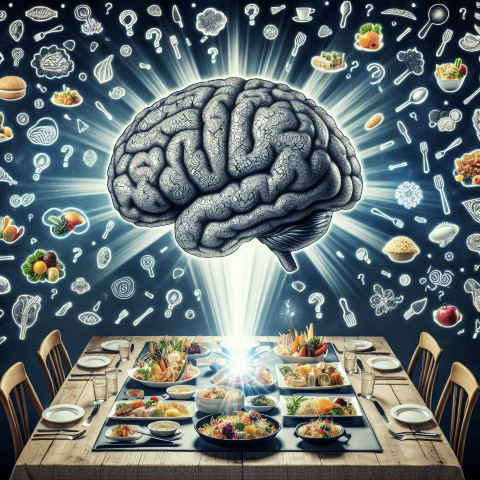
Food is served on a variety of plates today;  plastic, china, big, small, and even fast food wrappers.  So you might be wondering why I’m asking about the shape of your food plate. As a cook and a bit of a “foodie”, I love a beautiful presentation on the cool square plates and the look of the ovals.

food plate farm

Check out the food & farm bloggers at http://www.causematters.com/ag-resources/, too.

However, as an agriculturist, I’m firmly convinced our food plate needs to remain round so that we can have all sides connected equally, whether it’s the farmer, scientist, nutrition expert or consumer. The circle gives people the opportunity to reach across, shake hands, and find common interests.  For example, science, accuracy and credibility are hot buttons with food producers, dietitians and scientists. The frustration with food trends, misinformed celebrity “experts” and inability to connect facts are other common needs. However, I rarely see the connection across our proverbial food plate happening.

This is increasingly important in today’s era of distrust. According to How Risky Is It, Really?, people are more afraid of business & industry, politicians and a process that’s closed. They are less afraid – more likely to trust - consumer groups, a neutral expert and a process that’s open. So, I have to ask, how open are we to sharing information from all sides of the food plate? Are we clear about the roles of scientists in monitoring and improving food? Do we effectively explain the technology used to improve food and nutrition? I think not.

Author Davied Ropeik also points to “The less we know, the more afraid we are likely to be.” We have fewer people involved with farming, more generations removed – and many, many food activists trying to sway opinions. It all adds up to people being afraid – and I believe ALL sides of the food plate have a responsibility to work together to provide open, accurate information. That means farmers can’t hide behind our technical jargon, scientists have to get out of the lab and dietitians must find ways to explain what they do.  I had the opportunity to be with those types of experts yesterday at the International Food Information Council – and am convinced the answer to food literacy is in our ability to more closely connect the people around the plate.

Food is an intensely personal choice. It’s not our job to tell people their choice is wrong. It’s our job to speak from our side of the food plate AND reach across to understand other sides. How are you going to do that?


Balancing Harvesting & Parenting

Monday, September 13th, 2010

Fall has always been my favorite season. As summer draws to a close I always begin to look forward to cool nights and decreasing humidity. I look forward football games (cheering for a school that the hostess of this site edits out). I look forward to pulling my hooded sweatshirts and sweaters out again. I look forward to the turning leaves, apple cider and pumpkin pie. And I’ve always looked forward to harvest.

Even when I was just observing harvest from the road as I drove past the fields, I enjoyed it. I loved seeing the farmers in the field, red and green machines working hard all hours of the day and night. When I married into a farming family I continued to enjoy harvest. I got rides in the combine, brought meals to the field and was even coerced into shelling corn one afternoon. Then, last year, we had a baby, right in the middle of harvest. Pretty poor planning on our part!

Last harvest was hard. HandyMan has always helped as much as he could during harvest season, but having a newborn limited his availability. I was at home with Blue all day and needed help (and a break) in the evenings. Some days were pretty ugly. So HandyMan didn’t feel like he could help his dad as much as he wanted to – which made him feel guilty and torn. The few times that his dad did ask for help, I didn’t want him to. I wanted him home with me and Blue, and that made me feel guilty. Both of us were relieved when harvest was over!

This year we are entering into harvest season with some trepidation. After the emotions of last harvest, we are nervous about how this year will go. HandyMan will be helping a lot more this year; going straight from his full-time job to the field and working all evening with his dad as well as helping all weekend. Even though Blue is almost one (wow!), I still feel like I’m going crazy after spending a week home alone with him. I want a break and some adult conversation, so I’m nervous about being home alone with him all day.  I want HandyMan to help his dad because it’s important to him and he enjoys it, but I’m nervous about how I’m going to handle being home alone with Blue so much.

If any other farm wives/mothers or farmers have any suggestions, I would love to hear them!

~Guest Post by MRS


A Hunger for Faith-Based Agriculture Education

Monday, September 6th, 2010

Today I’m pleased to introduce Sarah Bedgar Wilson, M.S. as a guest blogger. She is the co-owner of Wilson Farm, Jamestown, North Dakota, where she, alongside her husband, Jeremy and their two daughters, ages 3 and 1, produce corn, wheat, soybeans, and pinto beans.  She was raised on her family’s farm in Maryland, where her extended family raises dairy heifers and a variety of crops. You can learn more about her “Farmer on a Mission” work at http://farmeronamission.blogspot.com.

Faith based agriculture education

A student at the 2009 Atonement Lutheran Church Vacation Bible School student enjoys a tour of Entzminger Dairy, Jamestown, ND.

While driving across the prairie on a starry night nearly two years ago, I prayed, “Lord, please help me to tell others about how you have called me to farm and to be a steward of your gifts.” Before I got home, the idea had come to me for the “10 Heifer Prayer”.

Each spring our Sunday school donates their collection to Heifer International, and each year the children have raised enough for a goat or a few chickens to donate to needy families around the world, but rarely enough to buy even one heifer.  I asked the council if they would help me to rally our church to help the Sunday School children raise not enough for one heifer, but TEN heifers ($5,000).  This would be an amazing gift that would provide a rural community in Ukraine over 40 gallons of milk a day.  I also asked if they would help me to teach the children about the basic biblical lessons of creation and stewardship and how they are being applied in agriculture today.  We called it faith-based ag education.

Children learning at church about agriculture

Children were excited to meet “Mary Moo” (yours truly) at “10 Heifer Prayer” events. Just don’t tell my children, they still don’t know it was me in the cow suit!

“Team Heifer” was formed and it turns out that, with God, anything really is possible.  Our church and the community were energized by the 10 Heifer Prayer.  On “Sundae Sunday” the children built a 50-foot long ice cream sundae in our fellowship hall, we had Sunday School lessons designed to fit the 10 Heifer Prayer theme, some nutty gal appeared on occasion in a cow costume (yep, it was me), Vacation Bible School was themed on creation and we even toured a dairy farm!  To conclude the project, I was asked to give a sermon, to share the story of how my family has been called to farm and serve as stewards of our land, animals and other natural resources.

Through this project, adults learned alongside the children and the results were astounding.  Not only did we raise enough to purchase 14 heifers ($7,000), but we also had a surprising turn-out to each event.  Especially Vacation Bible School, where we were planning for 30, over 90 attended the dairy farm tour!  People are hungry (pun intended) to learn about agriculture on a Christian/moral level.

There are two main reasons why I feel Christians in agriculture are obligated to share the truths of why and how we farm/ranch within the context of faith:

  1. Those whom oppose modern agriculture already have a presence in Christian circles.  For example, The Humane Society of the United States (HSUS) has strategically begun a “Faith Outreach” program.My own church is struggling with the Evangelical Lutheran Church of America’s (ELCA’s) draft social statement on “genetics” that discusses the use of genetics in agriculture. I could list many more examples, amongst all the major denominations.
  2. If we are faithful farmers and ranchers, following the command from the Lord to feed His people, then I believe He expects that we honor Him by sharing our testimonies on stewardship.  We also owe it to our fellow Christians who are not farmers/ranchers.  They are three to four generations removed from witnessing God’s miracles of growth and life in agriculture.

It is relevant, appropriate, and necessary that we in agriculture speak in terms of our faith about what we do.  Our consumers and our fellow Christians are demanding it.

In memory of Yvonne Hanzal, rancher’s daughter and beloved “Team Heifer” member.

~Guest Post by Sarah Bedgar Wilson, M.S.

Hungry for more? Related Post:

  1. The Sin of Animal Agriculture

Role Models in Agriculture: A College Student Speaks

Saturday, September 4th, 2010

Laura Beth Padgett, blogging on behalf of college agvocates.

We have another regular contributor to the Gate to Plate blog, Laura Beth Padgett, a sophomore at Oklahoma State University. She’ll be posting a couple times each month to add thoughts from a student in agriculture; I hope you’ll give her some positive feedback.

Growing up on a small farm in rural Indiana, I developed a deep passion for agriculture at any early age, nourished through my involvement in FFA and 4-H.  In high school I had the opportunity to compete on numerous state and national judging teams that  furthered my devotion to agriculture and opened doors for me to meet amazing people working to promote the industry. I met Michele six years ago at my very first dairy judging practice in eigtht grade and I have been working with her ever since. I’m excited that Michele is giving me the opportunity to blog about agriculture  from a college student’s perspective.

What do you want to be when you grow up? It seems as though every five year old can come up with an exciting and ambitious answer to this question.  Ranging anywhere from veterinarian to astronaut, their dreams are sky-high and inevitably different from what their ultimate professions will be.  Nonetheless, we encourage youngsters all across the country to set their sights on a difficult goal that they may someday achieve.

Entering my sophomore year in college, I’ve outgrown my dreams of being a veterinarian that saves thousands of sick animals or being the first human on another planet. However, the question of what I want to do after graduation continues to be the question that requires the most imaginative thinking on my part.  With so many opportunities offered to graduates of ag departments, it is all one can do to not set overly ambitious goals.  Though I believe what all my previous teachers and supporters said when they told me I can do whatever I set my mind to, I became concerned that my professional goals were either unrealistic or too picky. Thus, I began doing research on past agriculturists and found phenomenal people that were not afraid to set seemingly impractical goals in order to succeed.  Here are some of the role models I found:

George Washington Carver- Growing up in the time period immediately following the Civil War, Carver overcame a great amount of adversity to capture his dreams.  Forcing himself to triumph over obstacles from poverty to stereotypes, Carver was enabled to help innumerable Southern farmers as he introduced and developed peanuts all across the South.  Through his efforts, farmers (and peanut fans alike) will continue to benefit for years to come.

Dr. Temple Grandin- Overcoming numerous obstacles in her life, Dr. Grandin is one of the leading animal behavior scientists.  Her research has served to help modernization agricultural techniques while her determination to inform the public has lead to appearances on numerous television shows.  Proving to be a true advocate, Dr. Grandin has paved the way for other agriculturists to combine their knowledge and outgoing nature to not only help but also inform the public.

Dr. Norman Borlaug- Amazingly enough, Dr. Borlaug began the Green Revolution in the 50’s, 60’s and 70’s as he traveled to foreign countries developing new strains of crops that could function more efficiently in each region.  Scientists estimate Dr. Borlaug managed to bring millions of dollars of extra revenue to those countries while saving approximately one BILLION lives!  The deserving humanitarian was awarded the Nobel Peace Prize for his efforts.

Whether you’re still working on your education or are already out in the workforce, creating and evaluating personal and professional goals is essential to achieving your legacy.  What were your original goals when you set out to work in the agricultural busienss?  Who were you hoping to help while working toward your dreams?  How have you been working to turn those goals into a reality and serve as a role model for young people in agriculture.

~Guest Post by Laura Padgett


Advancing Social Media for Agriculture

Thursday, September 2nd, 2010

Society has shifted in an era of  500 million Facebook users, 50 million tweets, 450 million people on mobile internet and 68 million bloggers -  whether you accept new media or not.   We’re bombarded by 13,000 marketing messages each day, now largely due to new media. Watch the Evolution of Online Agvocacy if you want to see more.  All of this social media mania is also building a fear that humans may just stop having real conversations -after all, we can just text, direct message, instant message, Facebook or email (how old school!).

Lots of Agvocacy 2.0 buzz!

Nothing could be further from the truth, based upon the energy level of a group of farmers, ranchers and agricultural folks this week at the inaugural AgChat Foundation Agvocacy 2.0 Conference. The best talent in the business spent about 24 hours together in Chicago with the unified vision of helping connect food, fuel, feed and fiber by empowering farmers to tell their story. This is the same group that’s been a part of creating 6.7 million unique impressions with a “Thank a Farmer” effort on Twitter last November, influenced a change in Pilot and YellowTail’s support of anti-ag groups, answered non-farm questions in February for three hours for 3.1 million unique impressions. Suffice it to say, farmers have embraced the opportunity to help the 98.5% of the population not on a farm or ranch.

We talked “techie” tools like Tweetreach from dairyman Ray Prock and rancher Jeff Fowle – our resident 140Conference stars, who also demonstrated Tweetdeck. Artist and DVM Kathy Swift discussed FBML for Facebook and Ohio Farmer Mike Haley taught people how to shorten & track URLs with and the value of Listorious. There was threat of an “ag nerd versus ag communications smackdown” over Google Analytics with people like Kansas  data farmer Darin Grimm, who also loves TwapperKeeper. From blogs to videos, hundreds of tools flowed from nearly 30 speakers at the Agvocacy 2.0 Conference – and even more were shared in hallways and at dinner tables.

The greatest tool demonstrated at the conference? It didn’t have anything to do with technology.  It was the people connecting on a personal level. Some of my greatest learnings:

  1. Humans connect to humans. The Agvocacy 2.0 attendees had shared thousands of conversations, but most had never met. The buzz and energy were palpable, as you can see at Agvocacy 2.0 Buzz.
  2. Being 100% present. Sometimes technology moves people farther apart, even when they’re face-to-face. We saw people engage immediately, lay their technology aside and be fully present for the experience.
  3. Idea sharing. Some businesses believe they need to keep their “intellectual property” internal or it loses value.  How is an idea really valuable until you share it with others?
  4. Laughter. People in agriculture are very serious in trying to advocate. We sometimes forget the happy hormone release associated with gut laughs. I heard a lot of those in Chicago and even invested some nocturnal time in enjoying this myself.
  5. Community propels influence: One person may be able to reach 100, but 100 people create the momentum to reach 10,000 or 100,000. I’ve seen agvocates generate amazing results through their blogs, simple Facebook posts and YouTube responses. The personal connections galvanized in Chicago are going to influence the roadmap for our business for the long-term, big picture. This isn’t about a singular idea; it’s about a shift in thinking.

How are you advancing social media to tell agriculture’s story?  It’s not about the technology, it’s about the people.