






 When I see overweight kids, it saddens me. I know firsthand what it’s like to be a chubby adolescent – and the insults you hear when you’re a fat kid. I lost 20 pounds the summer between my eighth and ninth grade year. The weight loss was the result of discovering how to control my food consumption and the inspiration of the Olympics to “up” my exercise to a different level (though I was already an active farm kid and a distance runner). Those lessons have stuck with me through the years in trying to maintain a healthy weight.
Now as a mom, I wonder what’s gone wrong when the number of children that are overweight has more than doubled in the past 30 years – there’s now around 17% of American children ages 2-19 that are overweight. We’ve made a few discoveries as the parents of a school-age child, including physical education only being offered half the year every three days due to funding and outside recesses frequently being moved inside when it’s below 30 degrees in the winter. We have a great school system, but one side of the exercise nutrition equation is compromised – just as it is at many schools.
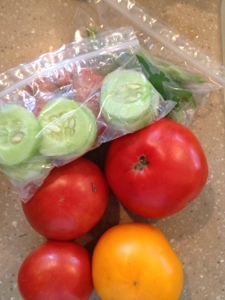
Some of the school lunch treats from our home garden.
Another discovery that surprised us – school lunches are cool to little kids. I have bad cafeteria memories of greasy slop and green goop called peas that I wouldn’t even feed my cows. But the school’s lunch room seemed reasonably O.K. when our little girl started there and even better as it switched to the new USDA standards over the last couple of years, adding fresh fruits and veggies. We’re fortunate enough to be able to afford a combination of packed and school lunches so she experiences both worlds.
Healthy food has always been a very high priority in our household (minus the cheetos that show up on vacation); protein, fruit, vegetable, some form of grains and milk make up most of our meals. So the new USDA nutrtition standards sounded O.K. – they seemed to follow the model we had set. And since the majority of students in our school qualify for the National School Lunch Program, I was glad that kids who may not have enough food would have healthier options.
However, my dietitian friends and then moms of high schoolers started talking about their kids being hungry. What? In all the USDA school lunch standards sat a maximum cap on protein. The government is regulating how much protein kids were allowed to eat. Since when should government dictate what our kids eat in the U.S.? And they’re going to limit flavored milk so the kids could turn to soda? Seems to smell like big government to me – all politics aside. Shouldn’t it be an individual choice or parental right to determine the maximum amounts of certain food types, whether you can afford to pack a lunch or not?
There’s example after example of kids going hungry after eating school lunches – see Sensible School Lunches on Facebook. Many of the blogs below will give you an idea of athletes with headaches and students who can’t focus due to hunger from not getting enough protein. If healthy eating habits is the goal of USDA, let’s teach smart nutritional choices – not limit a vital component of the diet. After all, if the nutrition program is broken, that means both sides of the exercise nutrition equation is now compromised – and we end up with unhealthy kids.
I also have to ask – is it really the government’s job to be mandating nutriton? I haven’t figured out where I stand on that yet, but can tell you that it’s easier to be a lazy parent and let others worry about nutrition. It’s easier to go to McDonald’s than cook a meal after working all day. It’s easier to send kids off to buy the school lunch, not really worry about what’s they’re eating – and have the government regulate them. It’s easier to not teach our children about nutrition and let them eat junk food. But easy isn’t usually the best route.

Helping to plant, weed and harvest this garden gives our child a hands-on nutrition education. Do most kids know where their food comes from or why nutrition is important?
When I asked the lady in charge of our school lunch program about how the new lunch program was going, her greatest concern was the amount of fresh fruits and vegetables in the trash every day. That’s a waste in a country where one in five people face food insecurity. It’s also a waste of opportunity – kids need to care enough to give serious consideration to their food choices and why that food is important to their well-being. Until we can accomplish that, I suspect all the debate is for naught.
Thoughts from moms and dads wanting choice in school lunches:
The Quest for a “Balanced Diet”
School Lunch Soapbox – How to Fix the Problem Without Food
Where’s the Beef? New 2012 School Menus are Lean on Meat
Does Your Child Fit the ‘One Size Fits All” Lunch Program?
If you want to add your voice to the mix, this is a good place to start:
Undersecretary of Food & Nutrition Services
Kevin Concannon
1400 Independence Ave, S.W.
Washington, D.C. 20250
Secretary of Agriculture
Tom Vilsack
1400 Independence Ave, S.W.
Washington, D.C. 20250