
Cause Matters Blog

Archive for the ‘Dairy’ Category

Candid Cameras on Factory Farms

Thursday, April 28th, 2011
Video tapes of farms

Would you want this in your family's business?

Many businesses with intellectual property don’t allow cameras; think John Deere, Ford, Google. Homes are protected from such invasions on privacy; imagine how you’d feel to discover a hidden camera in your bedroom. But what about farms? If you’re a part of animal agriculture, you need to consider how you’d look on candid camera. Ongoing videos from animal rights activists and legislation proposed to make such such actions illegal in Iowa, Minnesota and Florida have brought the issue to the forefront.  On the opposite end of the spectrum are those who believe every operation should install cameras.

The nasty videos aren’t going to stop. There are bad apples who don’t deserve to be called farmers. There are also terrible humans, who have gone through rigorous screening by a farm and signed paperwork against abuse, but still end up in the barns doing terrible things to animals. And, yes, there are groups who stage such abuse to further their cause.  We have to accept that these videos will keep coming. The question is what we do to protect both the families and animals involved.

Do farms have something to hide? The proposed legislation is certainly being viewed that way. I struggle with this; it should be  as wrong for trespassers to be video taping on a farm as it is for someone to walk in a school and film children. Both should require permission – and have legal ramifications if none is given. Likewise, any abuse that’s filmed should be turned over to the authorities – immediately.  Not waiting 3 days or 3 weeks to execute a strategic campaign to raise funds or publicity for your organization – but immediately.

Farmers aren’t hiding animal abuse, but animal agriculture isn’t pretty.  As I write this, we’ve had record-high rainfalls in the central Midwest – which means cattle are standing knee deep in mud in some locations. These same cattle graze in lush green pastures and lounge in the sunshine in summer (to the envy of this human). But it’s simply not pretty right now – no matter how much cleaning and care is given – or if it’s a “factory farm” or small operation.

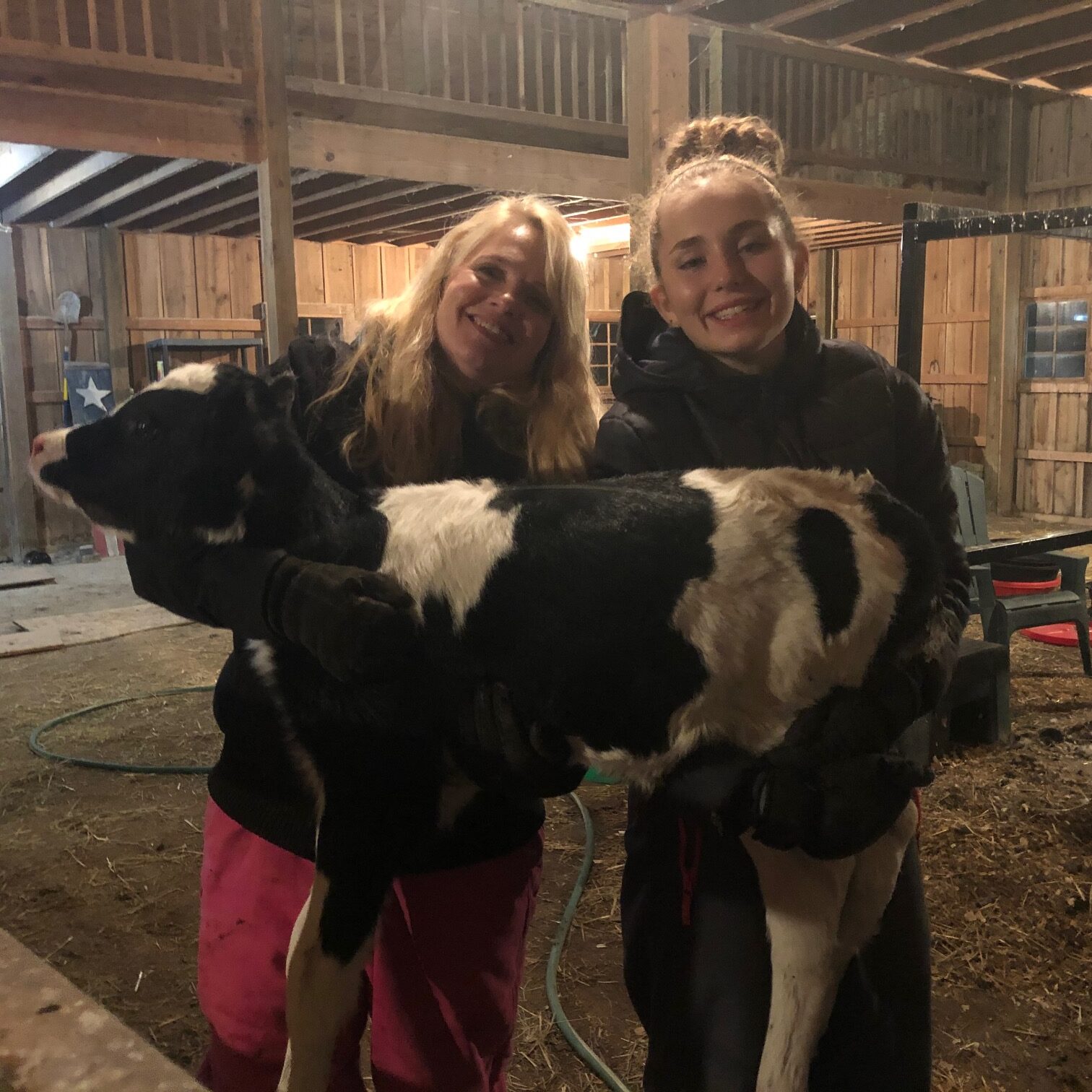
Another not so pretty reality; animal agriculture practices can look terrible, even when done in the best interest of the animal. We had a cow go down on pasture last summer on a 90 degree day. Keeping this animal alive required me smacking her across the face and kneeing her chest as hard as my human weight could muster.  Before you judge me; consider the shock it takes to keep a human heart going – and then multiply that by 10. Once we had the heavy equipment ready (a necessity with downed animals) we got her off the ground by putting a metal device around her hip bones and then raised the hip lifts with a tractor so she could stand. When she was steady enough to walk, we helped her back to the barn, with urine pouring out of her and manure all over (cows don’t use bed pans).

Is this an image we want on camera? I think not. It would have looked terrible on CNN and would been incorrectly labeled as animal abuse. Yet, the cow lived and did not suffer needlessly – because two women cared enough to do some “ugly” things in the interest of animal husbandry. The same scenario is played out a hundred different ways on farms (large and small) across the country every day. Animals get hurt, need to be euthanized and do stupid things like getting their heads jammed into places they don’t belong. If you work with animals, you know this. But I’d wager 99% of the population does not know these things about farm animals firsthand. And more to the point, they won’t have any knowledge unless you help them.

property rights on farmsDoes this mean I think all farms and ranches should install cameras, upload their footage to YouTube, then tweet it and cross-populate to Facebook?  Absolutely not. I’m not a fan of putting video cameras in barns because animal agriculture isn’t pretty. And until the public is more familiar with this reality, I’m not sure they’re ready to see the scenario that I describe above – which was not on a “factory farm.” I also believe it should be a farmer’s choice on his/her own property.

I applaud those that have installed cameras, including J.S. West with chickens and Belstra with pigs – and know many more are considering it. What is recorded should remain as a farm’s choice. But the lack of desire to have “candid cameras” on farms doesn’t mean that farmers and ranchers aren’t being transparent. It simply means that farms are a place of a business, a family’s livelihood and yes – a place of privacy.

What do you think? How does agriculture bridge the gap?


The Tears I’ve Shed… Animal Abuse

Wednesday, April 20th, 2011

Today marks the release of yet another nasty video.  One more portrayal of animal abuse.  Another one that makes me cry.  You might be surprised that I’m not numb after a decade of monitoring the animal rights videos. Simply put, they make me sick.

I shed tears because this is B.S. that is so unfair to the great people who work their rears off to bring you milk, cheese, ice cream, etc. No dairy farmer that I know is looking for your pity, but I want to be sure food consumers understand that making milk is a 365 day/year commitment. A person is a part of the dairy business because they love it. It creeps into your soul as though you have no choice. And that love is the singular guiding factor when equipment breaks down at 3 a.m., a cow needs your help regardless of the family event you planned six months ago and your business operates in the red for six months because milk prices stink (again).

Farmers abuse calves

Still feeding heifers, including the one I respected enough to put down.

I shed tears when I see dairy calves so terribly abused. It’s deeply personal; calves are part of my earliest memories. At 6 years old, I swept our calf barn – and was thrilled to do so because  the calves were my friends that I could sing and dance for. As a teenager, I gave my FFA speeches to our cows (they always gave me a standing ovation). I knew they were there to produce food and would eventually die, but I’ve always considered it a privilege to spend time with the great dairy cow. True cow people consider it an honor to work with animals. That alone would make me think about grabbing the person who was in front of the camera on these “undercover farm videos” and toss them farther than they tossed that poor calf. I’ll never condone physical violence, but  I would likely consider the same action for the videographer because there’s no way any true animal lover could watch “calf cruelty” like that. Did I mention that I kickbox?

My lifetime includes thousands of tears about animals that we worked so hard to save and couldn’t. Just this winter,  I had to make the decision to put my favorite heifer down.  After enlisting the help of a vet and our dairy farm neighbor who diligently cared for her, her condition degraded. This wasn’t just any heifer; it was one of the best descendants from a cow family I’ve developed since I was 12. And the daughter of a cow that our little peep helped show at age 1 1/2.  Big emotional investment. But out of respect for the animal, I knew she had to be euthanized. And yes, I cried.

Some try to argue that there’s no way farmers can love animals since livestock are put to death for food. It’s called perspective on the life cycle. Our family gives thanks at every meal for the food, animals who make it possible and farmers who raise the food.  Grace around the farm tables across the country echo this. Animals are entrusted to farmers to be cared for with respect. If you’ve come upon this post as a food consumer, please find a farmer who raises animals for food production and have a conversation. If you need that connection, let me know and I’ll help you. It’s not that farmers and ranchers don’t want to talk – they’re just a bit occupied with caring for their land and animals.

Dairy farmer talks Mercy for Animals

Do prostitutes represent all women? Animal abuse videos also aren't representative of dairy farm families.

All I have to do is look at the pictures in Mercy for Animals (MFA) propaganda and I shed a tear for images that can be likened to prostitutes representing all females. Some would describe it as gross, others are sickened, while some of the population tries to ban it. But in both cases, the images are not a fair representation of the population. My girlfriend who milks my cows is no more of a prostitute than she is an animal abuser.  Nor am I. And it breaks my heart to know that some think that’s all there is to farmers. Isn’t it time we change that with a conversation? Take responsibility today!


Cows need nutritionists? Don’t they just eat grass?

Friday, March 11th, 2011

~ guest blog post by Robin Rastani, Ph.D

This is the response that I frequently get from family members and fellow travelers in airports, when they ask about my work. Many people still think that dairy cows consume grass and grass alone. They have that idyllic image of black and white cows out in a green pasture next to a red barn. While some cows can sustain many of their needs on grass alone, they are usually the non-lactating cows (i.e., cows that aren’t producing milk). A lactating dairy cow has a high metabolism, and is very similar to a marathon runner or high performance athlete.

Dietitians for Milk Cows

Dairy cattle enjoy a scientifically balanced diet to make wholesome milk.

A modern dairy cow consuming grass alone would be equivalent to a marathon runner or Olympic athlete consuming only lettuce with a few sprigs of broccoli. In the old days, everyone had a couple cows, and they only needed to make enough milk for their family. The modern dairy cow now makes about 10 gallons of milk every day. On grass alone, a modern average producing lactating dairy cow would eventually lose tremendous amounts of weight and be unhealthy. As a dairy cow nutritionist, I make sure cows have all the needed nutrients to perform and remain healthy while producing healthy nutritious milk.

A typical dairy cow’s diet consists of around  about 50% forage and 50% grains. Most of the forages are plant material that is fed as hay or fermented forage, known as silage. This allows farmers to feed grass, legume and corn-based forages year round. The most common concentrates fed are corn and soybeans, along with by-product feeds like whole cottonseeds, citrus pulp, almond hulls or soy hulls. Cows enjoy variety in their diets, and having a mix of both forage and concentrates allows this. Just like with human nutrition, we must provide the correct amounts and balance of nutrients.

Cows are different from humans in that:

  1. Cows have a four compartment stomach with a large fermentation vat. This fermentation vat is known as the rumen. In the rumen, bacteria help to digest the feed. This allows cows to obtain nutrition from feedstuffs that contain cellulose and fibrous material that humans and other animals cannot. This is one reason why cows can consume many by-product feeds.
  2. Cows are limited in the selection of feed that is offered to them. Nutritionists formulate their diet, and it’s offered to them in one mixed up casserole, called a total mixed ration or TMR. However, cows can be picky, and they will try to sort through the feed offered to them. Just like humans, they prefer some feedstuffs to others.
  3. Cows also have the ability to ruminate. They eat their meals rather quickly, and then while resting they will further digest the feed that was consumed. They regurgitate a ball of feed, known as a cud, and then they chew on that cud. This allows them to break up the feed into smaller particles. It also produces saliva, which helps to keep the material in the rumen from becoming too acidic and cause indigestion.

As a cow nutritionist, I do have some advantages that I’m sure dietitians would appreciate. I can check diets based on records of what’s been consumed, chemically analyze that diet, and modify it accordingly… and my clients (the cows) will usually accept my recommendations. Frankly, cows eat better diets than humans!

There are many similarities and a few key differences between the nutritional demands of a cow and a human, as you can see. Cow nutritionists have a common goal with human dietitians – providing a healthy, balanced diet within a budget for our clients.

Nutrionist on corn vs grass

While holding a Ph.D in nutrition, Robin enjoys interacting with consumers about practices on dairy farms, as well as the benefits of dairy products.

If you’re a farmer or agricultural professional, this knowledge may see mundane or commonplace. However, to many of your neighbors and consumers of your products, it is new and intriguing to them. How can you explain the science of food production to them?

Robin R. Rastani, Ph.D., is a Dairy Technical Manager for NOVUS International, Inc. She works with dairy producers and nutritionists to provide optimal nutrition for dairy cows to ensure the cows are healthy and produce a great product for consumers. Feel free to follow her on Twitter (@cownutritionist).


Mom Frustrated with Food Guilt

Wednesday, January 26th, 2011

Overwhelmed. Confused. Frustrated. Guilt-Ridden.

~ guest blog post by Kim Kotecki

This is how I’ve felt about buying food for my family, as I try to find the balance between our health and our budget.

Kim Kotecki talks organics

Is it possible to go to the grocery store without being confused and then overwhelmed by guilt around food? We learned talking to people in agriculture can help with that.

Being the mom of a curly haired two-year-old, I have spent the last two and a half years being inundated with what I think is “fear-based marketing” about nutrition for myself, when I was preggers, and for my growing cherub.

In our line of work, my husband and I try extra hard to live a stress-free lifestyle and all of the messages I was receiving about nutrition were really stressing me out. Talk about Adultitis™!

Being self-employed and in charge of marketing for our company, I am conscious of how “fear-based marketing” works and it really stinks to be on the consumer side of such fear tactics.

Through blogs, parenting sites, T.V. shows, Facebook, and just hearing others moms talking, true or not – this is the message I heard loud and clear…

“Do not buy ‘regular milk’ for your one year old. Do you know what’s in there? You need to bite the bullet financially and go organic – for the health and well-being of your child.”

Well, I bought the ‘regular’ milk anyway and hoped the fear-based marketing was just a ploy to sell overpriced milk. But was it?

I had guilt. I felt like I was unofficially allowing my precious daughter to someday go through premature puberty by allowing her to ingest all of the extra hormones that would not be found in organic milk.

Were the rumors about the hormones even true?

Heck, I don’t know… but I assumed they probably were. As a former teacher, I saw far too many girls wearing bras in second grade! What’s up with that?! Somewhere along the way the connection was made that it was because the milk is filled with hormones. As much as I wished I had gotten at least a few hormones along the way (ha!), I didn’t want my daughter to be Dolly Parton in high school, ya know?

So, at the end of the day, did I believe the marketing – the messages about hormones and milk?

Yes, I hate to admit it, but I did.

Was I gullible or just guilt-ridden?

(Side note: Aren’t us moms too often guilty of assuming the worst case scenario when it comes to our kids?)

At the end of the day, we just couldn’t afford the organic stuff. It was double the price and already our household budget had taken quite the hit with baby food, diapers, healthcare, (the joys of self-employment) and all of the other little expenses that come up in the day-to-day – like those toddler-sized Chuck Taylors she “needed.”

Then, Michele came into my life and my eyes were opened to a whole different perspective on this conversation (thank goodness) I asked her my questions about my concerns and confusion. Her answers – as a real life dairy person – astounded me! I realized that I was in the unique position to have a friend whom I trusted who “knew her stuff” about all of this. Most new moms don’t have this person in their lives and so they make one of two choices – either they buy organic to help themselves sleep better at night or they settle for the “regular” stuff and hope for the best (while feeling guilty for not giving their child “the best” that’s out there).

I asked Michele…

Are there really hormones in the milk that will give my daughter premature puberty or worse (the “C” word – cancer)!?

What are the advantages of buying organic?

Are there advantages of eating non-organic, besides the obvious (more money left over to buy other things)?

What about fruits and vegetables?

These are the basics, I know, but to find a trusted resource is priceless.

Busy, overwhelmed parents need these answers!

One of the first things Michele shared with me is that farmers LOVE their cattle! She shared that they work VERY hard protecting the milk quality and then it’s tested over and over again to make sure it is safe from anything that might harm a consumer of any age. They have strict regulations that they abide by on a regular basis to make sure that the milk continues to be safe – antibiotics are not in any of the USDA Grade A milk in our dairy case. I can feel confident that the milk I am giving my daughter is “the good stuff.” Great news!!

I also learned that the organic section of our grocery store does not necessarily offer the same peace of mind. After having my eyes opened to the rigorous process USDA and FDA requires for products used by farmers, I heard that some organics can contain carcinogens and may have a greater risk of causing food-borne illnesses.  Yikes!  At the end of the day, I am happy to support the farmers that make up a good portion of the very state we live in (Wisconsin).  I will know that if I start to hear rumors filled with more fear based marketing about non-organic foods, I’ll will seek firsthand information from Michele or someone in agriculture right away! She helped me understand it’s about making our family’s food choices on facts, not marketing, much like farmers decide how they’re going to farm. That sure helps me feel less guilty.

How can this message get out there to those like me, who didn’t know where to turn when the final decision needed to be made?

Kim and Jason KoteckiKim Kotecki is a mom and former kindergarten teacher who moonlights as an author and entrepreneur. Kim and her husband Jason (a professional speaker and cartoonist) make it their mission in life to fight Adultitis™ and help people use strategies from childhood to create lives with less stress and more fun. Stop by www.KimandJason.com, follow them on Twitter or Facebook.

Note from MPK:  I asked Kim to share her experience about being a mom overwhelmed with food “information.”  I think she’s representative of many moms out there who don’t have the answers and don’t know where to find them. Our conversation happened casually in the middle of a lake – an honest exchange between friends. I tried not to be defensive or use a lot of science, but just talked mom to mom. I urge you to do the same, whether you’re a farmer or a consumer – find someone you can ask questions about the food you buy for your family – don’t believe the food guilt promoters!

Hungry for more? Related posts:
Dr. Oz, Food and Urban Legends
Food Choices
High Fructose Corn Syrup: Good or Bad?


Home for the Holidays

Thursday, December 30th, 2010

Christmas time is always one of the best times of the year.  Not only is it a chance to celebrate the values you believe, it gives many people the chance to return to their homes and family, if only for a few days.  Falling into the category of someone who gets to travel back to her family, I’ve been able to return to those things I’ve missed out on while at college and working.  Though I enjoy the chance to see my family and friends, one of the best parts of the trip is simply returning to my agricultural roots.

Growing up, I actively participated in everything I could find that would teach me about agriculture.  This lead to hours spent putting finishing touches on 4-H projects; miles walked training animals and incessant repetitions of the perfect FFA speech.  Coming home, I can’t help but look through old pictures and ribbons reminiscing of all those trips and contests that helped teach me so much more than simply facts about agriculture.

Though I only get these three weeks of the year at home, I try to make it last by catching up with people I missed throughout the year.  Obviously close friends and family top the list of those I find first, but they are quickly followed by the people who helped me through my 4-H and FFA careers.  Over these three weeks, I try to meet with my high school FFA advisor, my former dairy judging coaches, the family who taught me to judge and show meat goats and other people in the community who worked to teach me about agriculture as they showed the value of hard work on the farm.

In high school, I always liked working with my animals; however, feeding them was not one of my favorite pastimes.  Don’t get me wrong; I always fed them on time and took care of them, keeping their health at the top of my priority list, but sometimes it just took a little coaxing to leave the nice, warm house to go out in the Indiana snow storm to care for them.  Now it amazes me how much I’ve missed feeding and caring for the animals out in the barn.  Living in a city essentially all of this calendar year has taught me the value of the quiet time people can spend while caring for their animals in the barn or pasture.

Sitting by a fireplace, catching up with old friends and reading some of my favorite books are all ways that make my vacation relaxing, but nothing compares to going back to the old routine of working out in the barns.  What ways do you celebrate the holiday season?  How do you get back to your agricultural roots?

~ guest post by Laura Padgett

Hungry for more? Related posts:
Teaching with Technology: Agriculture & Universities
Teaching with Technology II: Agriculture & Universities
Airport Agvocacy